
SEAGULL HEALTH
Your health,We care!
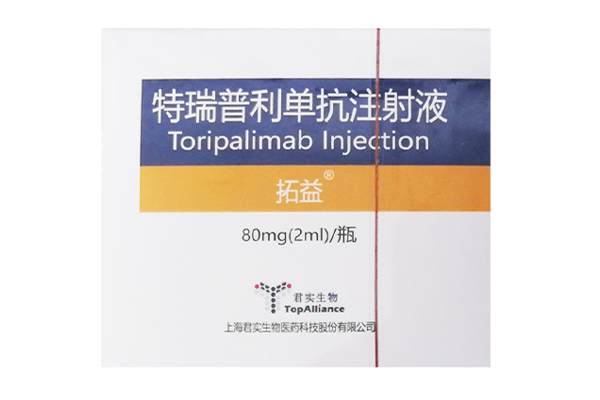
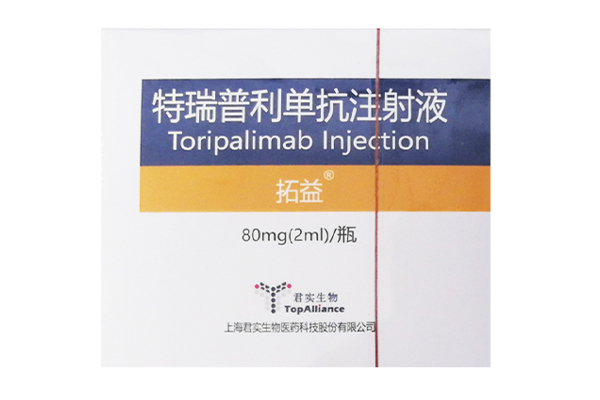
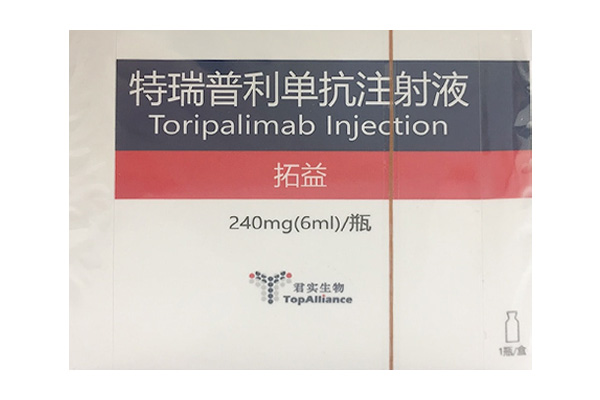
As a domestic PD-1 inhibitor, Toripalimab Injection is advantageous for its broad-spectrum anti-tumor effect, definite efficacy of monotherapy or combination chemotherapy against various advanced solid tumors.

 AuthenticGuaranteeFast DeliveryPrivacy
 Toripalimab has been approved for marketing or is under review in more than 40 countries and regions including China, the United States and Europe, emerging as one of the representatives of domestic innovative biopharmaceuticals entering the global market.
1.This product is indicated for the treatment of unresectable or metastatic melanoma in patients who have failed prior systemic therapy. *
2.This product is indicated for the treatment of locally advanced or metastatic urothelial carcinoma in patients who have failed platinum-containing chemotherapy, including those with disease progression within 12 months after neoadjuvant or adjuvant chemotherapy. *
*The above indications have been granted conditional approval in China based on the objective response rate results from single-arm clinical trials. The full approval of these indications will depend on whether the ongoing confirmatory clinical trials can demonstrate long-term clinical benefits in Chinese patients.
3.This product is indicated for the treatment of recurrent/metastatic nasopharyngeal carcinoma in patients who have failed second-line or above systemic therapy.
4.This product, in combination with cisplatin and gemcitabine, is indicated for the first-line treatment of patients with locally recurrent or metastatic nasopharyngeal carcinoma.
5.This product, in combination with paclitaxel and cisplatin, is indicated for the first-line treatment of unresectable locally advanced/recurrent or metastatic esophageal squamous cell carcinoma.
6.This product, in combination with pemetrexed and platinum-based drugs, is indicated for the first-line treatment of patients with epidermal growth factor receptor (EGFR) mutation-negative and anaplastic lymphoma kinase (ALK) negative, unresectable locally advanced or metastatic non-squamous non-small cell lung cancer (NSCLC).
7.This product, in combination with chemotherapy for perioperative treatment followed by monotherapy with this product as adjuvant therapy, is indicated for adult patients with resectable stage IIIA or IIIB non-small cell lung cancer (NSCLC).
8.This product, in combination with axitinib, is indicated for the first-line treatment of patients with intermediate or high-risk unresectable or metastatic renal cell carcinoma.
9.This product, in combination with etoposide and platinum-based drugs, is indicated for the first-line treatment of extensive-stage small cell lung cancer (ES-SCLC).
This product must be administered under the guidance of a physician experienced in cancer treatment.
1.Monotherapy indications: Unresectable or metastatic melanoma that has failed prior systemic therapy; locally advanced or metastatic urothelial carcinoma that has failed platinum-containing chemotherapy (including disease progression within 12 months after neoadjuvant or adjuvant chemotherapy); recurrent/metastatic nasopharyngeal carcinoma that has failed second-line or above systemic therapy.
The recommended dosage is 3mg/kg, administered as an intravenous infusion once every 2 weeks, until disease progression or unacceptable toxicity occurs.
2.First-line combination therapy indications: First-line treatment of locally recurrent or metastatic nasopharyngeal carcinoma; first-line treatment of unresectable locally advanced/recurrent or metastatic esophageal squamous cell carcinoma; first-line treatment of unresectable locally advanced or metastatic non-squamous non-small cell lung cancer (NSCLC) with epidermal growth factor receptor (EGFR) mutation-negative and anaplastic lymphoma kinase (ALK) negative; first-line treatment of intermediate or high-risk unresectable or metastatic renal cell carcinoma; first-line treatment of extensive-stage small cell lung cancer (ES-SCLC).
The recommended dosage is a fixed dose of 240mg, administered as an intravenous infusion once every 3 weeks, until disease progression or unacceptable toxicity occurs.
3.Perioperative treatment for resectable stage IIIA-IIIB NSCLC: The recommended dosage is a fixed dose of 240mg, administered as an intravenous infusion once every 3 weeks. For perioperative treatment, 3 cycles of neoadjuvant therapy with combination chemotherapy are given, followed by 1 cycle of adjuvant therapy with combination chemotherapy. Then, continue adjuvant monotherapy with this product at a fixed dose of 240mg via intravenous infusion once every 3 weeks, for a total of 13 cycles, or until disease recurrence or unacceptable toxicity occurs. On the premise that the maximum of 4 cycles of perioperative combination chemotherapy is satisfied, the cycle of perioperative combination chemotherapy and the timing of surgery can be adjusted according to the actual clinical situation.
When Toripalimab is administered in combination with chemotherapy, Toripalimab should be given first. See also the prescribing information for the chemotherapy drugs used in combination.
Atypical responses to tumor treatment with this product have been observed (e.g., temporary tumor enlargement or appearance of new small lesions in the first few months of treatment, followed by tumor shrinkage). If the patient’s clinical symptoms are stable or continuously relieved, even if there is preliminary evidence of disease progression, continuation of treatment with this product may be considered based on the judgment of overall clinical benefit, until confirmed disease progression is documented.
Temporary suspension of administration or permanent discontinuation may be required based on the safety and tolerability of individual patients. Dosage escalation or reduction is not recommended.
Patients with hypersensitivity to the active ingredient of Toripalimab Injection or any of its excipients.
The incidence of all-grade adverse reactions with toripalimab monotherapy was 94.4%. Adverse reactions with an incidence rate ≥10% included anemia, increased alanine aminotransferase (ALT), proteinuria, increased aspartate aminotransferase (AST), decreased white blood cell count, increased blood glucose, increased thyroid-stimulating hormone (TSH), hypothyroidism, rash, increased blood bilirubin, fatigue, fever, pruritus, cough, decreased appetite, increased blood triglycerides, and increased blood creatine phosphokinase.
The incidence of grade 3 and above adverse reactions was 31.2%. Adverse reactions with an incidence rate ≥1% included anemia, hyponatremia, increased lipase, hypertension, infectious pneumonia, increased amylase, increased blood glucose, increased ALT, increased AST, increased blood bilirubin, increased blood triglycerides, thrombocytopenia, and decreased lymphocyte count.
The incidence of all-grade adverse reactions with toripalimab in combination with axitinib was 92.3%. Adverse reactions related to this product with an incidence rate ≥20% included hypothyroidism, hyperlipidemia, increased AST, abnormal liver function, increased ALT, diarrhea, positive urine protein, abnormal thyroid function test, and hypertension.
Pregnancy
There are no data available on the use of this product in pregnant women. Animal studies have shown that PD-1-blocking antibodies have embryotoxic and fetotoxic effects. Human IgG4 is known to cross the placental barrier; as an IgG4, this product may be transferred from the mother to the developing fetus. The use of this product during pregnancy is not recommended unless the clinical benefit outweighs the potential risks.
Lactation
It is unknown whether this product is excreted in human milk, as well as the effects of this product on breastfed infants and milk production. Since human IgG is excreted in breast milk, this product may pose potential risks to breastfed infants. Therefore, lactating women are advised to discontinue breastfeeding during the treatment with this product and for at least 4 months after the last dose.
Contraception
Women of childbearing potential should use effective contraceptive measures during the treatment with this product and for at least 4 months after the last dose.
Fertility
No studies have been conducted to evaluate the effects of this product on fertility. The impact of this product on male and female fertility remains unknown.
The safety and efficacy of this product in pediatric patients and adolescents under 18 years of age have not been established.
In the current clinical trials of this product, patients aged ≥65 years accounted for 27.9% of the total patient population.
Among 943 patients receiving toripalimab monotherapy, patients aged ≥65 years accounted for 23.2% of the total. Among 1,488 patients receiving toripalimab in combination with chemotherapy, patients aged ≥65years accounted for 29.7% of the total. Among 208 patients receiving toripalimab in combination with axitinib, patients aged ≥65 years accounted for 35.6% of the total. No significant differences in safety were observed in geriatric patients.
No special dose adjustment was performed for geriatric patients in clinical studies. It is recommended that geriatric patients be treated with caution under the guidance of physicians; if use is necessary, no dose adjustment is required.
For more detailed drug information, please consult the official package leaflet.
Toripalimab is an anticancer drug classified a···...【详情】
The recommended dose of toripalimab is usually···...【详情】
Toripalimab is a PD-1 inhibitor, a type of tum···...【详情】
Toripalimab (anti-PD-1 monoclonal antibody) is···...【详情】
Toripalimab is a PD-1 inhibitor classified as ···...【详情】
If any issues arise, please contact us immediately.
Email:haiousales@gmail.com
Toripalimab must not be used after its expiry date. If only the outer packaging is damaged while the inner unopened vial remains intact, the product can still be used.
This product should be stored at 2–8°C, protected from light, and must not be frozen.
This medication must be used strictly under the guidance of a doctor or pharmacist. Self-adjustment of the dosage regimen is not recommended. Please contact a qualified healthcare professional promptly in case of special circumstances.
Copyright 2024 @ haiouhealth.com All right reserved SEAGULL HEALTH


